
DSU IN THE NEWS · AUGUST 2026
From DSU Kids to Designers
Two alumni reimagine the place where they grew up
DSU Kid
Homework, pool, ping pong and cooking at DSU
CEO Program
Middle school: learning to own their decisions
HireDuxbury
March 2026: met architect Christine Monaghan
Architecture Intern
Summer 2026: redesigned DSU for the next generation
When Tucker Leahy and Hunter Titone began a summer architecture internship, their assignment came with an unusual advantage: they already knew the client.
They had done homework there, played pool and ping pong there, cooked there and enjoyed many great memories with friends there. Years before anyone handed them an iPad to scan the building or asked what they would do with its concrete walls, DSU had simply been part of growing up in Duxbury.
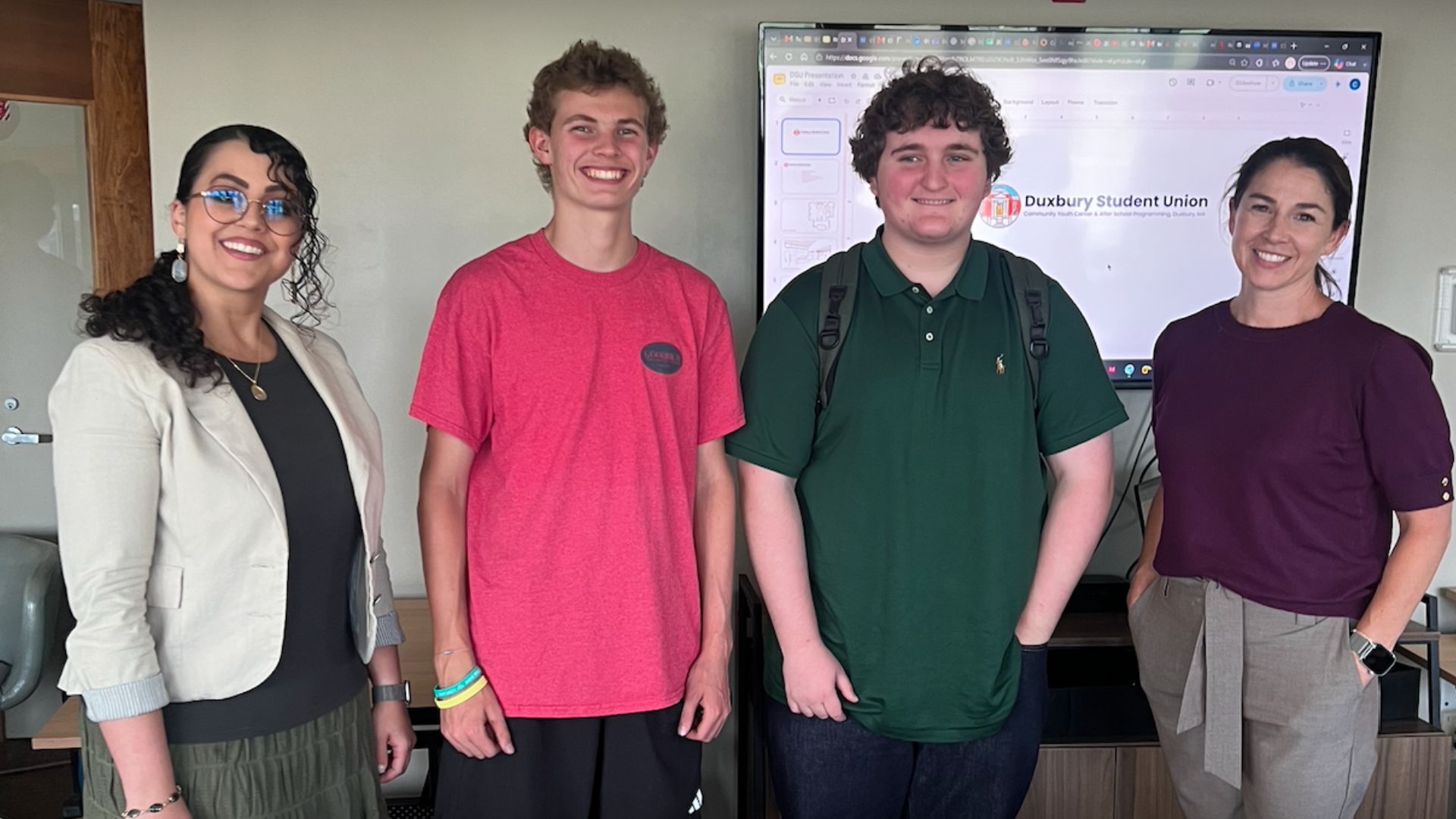
This summer, Tucker, now entering 10th grade, and Hunter, entering ninth, returned to DSU with local architect and planner Christine Monaghan and her colleague Kianna Mohammed. This time, they were not there as students. They were there as designers.
The project began several months earlier at HIREDuxbury, DSU’s annual March career and job fair, where Tucker and Hunter caught Monaghan’s attention. Both had previously participated in DSU’s middle-school CEO, or Chief Everything Officer, Program, which asks young people to begin thinking about what it means to take greater responsibility for their own success.
Monaghan saw an opportunity to move that idea from theory into practice. Rather than give the students a hypothetical design exercise, she gave them a real building, real users and real constraints: reimagine key areas of DSU for the students and campers who will use them next.
Designing for how kids actually use a space
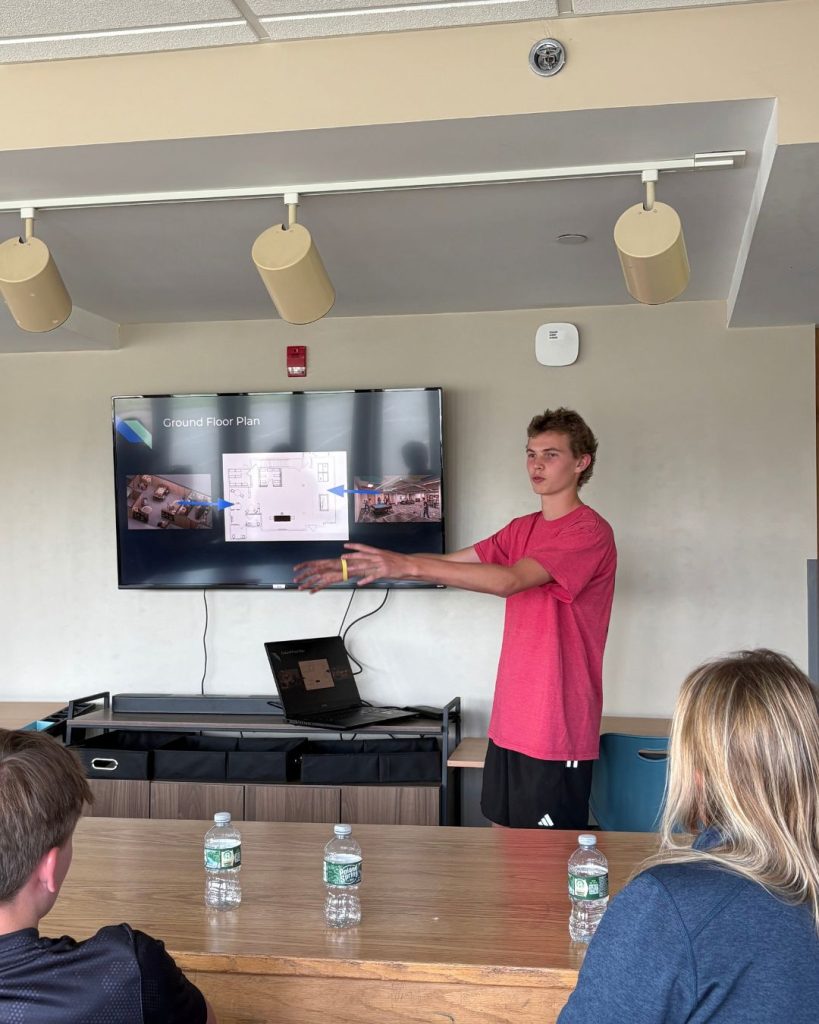
During their first week of summer vacation, the team began scanning DSU to create a 3D model focused on the main floor and game room. Tucker and Hunter interviewed longtime DSU staff members Sue Bradford and Jess McDermott about how the building functions nearly 20 years after it opened.
They quickly discovered that good design starts with questions.
The game room, for example, has to perform two almost contradictory jobs. It is a place where middle school students can settle in to do homework, but it is also home to pool, ping pong, foosball, air hockey, basketball games and old-school video games.
It can be quiet. It can also get loud.
And while the building was created before multiple personal devices became a routine part of childhood, DSU has moved deliberately in another direction. Almost three years ago, it chose to limit recreational technology use during programs and emphasize face-to-face interaction instead. That decision created its own design challenge. More games and hands-on activities mean more equipment, more supplies, more storage needs and, inevitably, more noise.
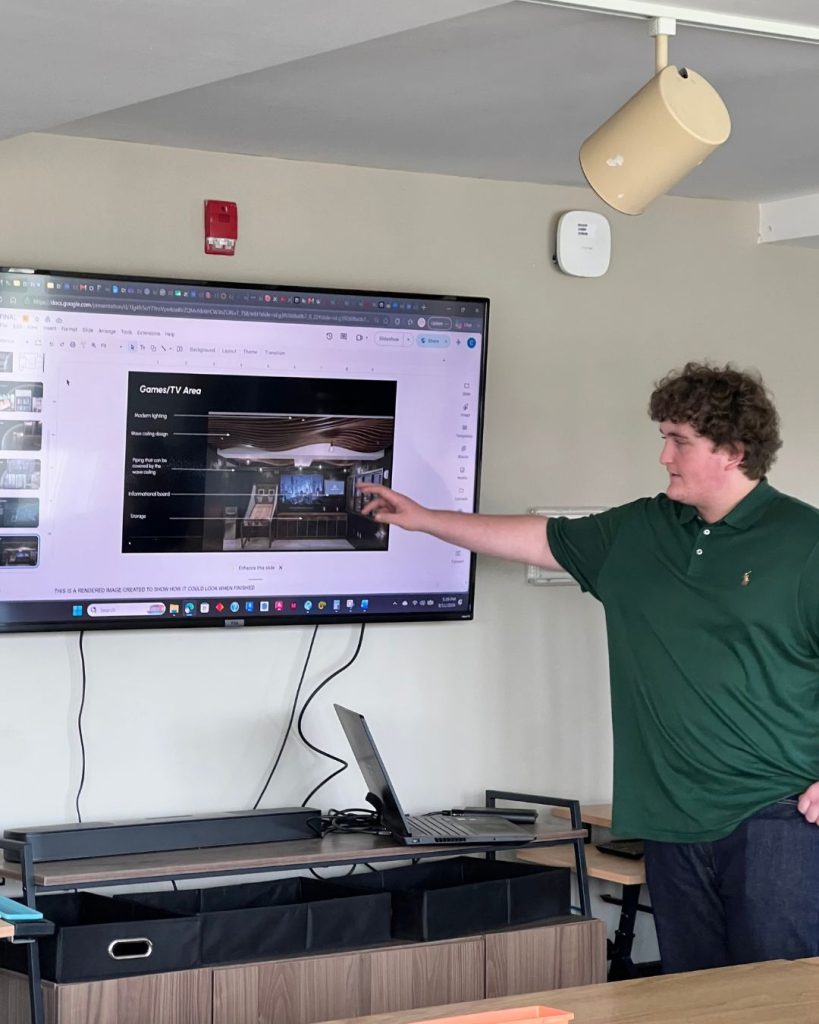
Tucker and Hunter did not see the answer as replacing the old with the new. They wanted to preserve the parts of DSU they remembered. Both felt strongly that the game room’s familiar games should remain, while the physical space could work harder around them. Hunter, drawing inspiration from Amsterdam’s airport, proposed modern wood paneling to soften the concrete surfaces and help absorb sound. Tucker introduced colorful acoustic panels to bring warmth and energy to the room. They incorporated quieter homework nooks along with rolling bookcases and built-in storage, treating storage not as something to hide in a corner but as part of the architecture itself.
Putting the kitchen at center stage
On the main floor, they focused on the Blender café. Cooking and food preparation had been memorable parts of their own DSU experience, and the students saw an opportunity to make those activities more visible and accessible. Their proposed kitchen gives students a front-row seat. Some can work directly in the preparation area while others gather at a counter where they can see what is happening, learn and participate.
It is a small architectural decision that reflects a bigger idea running through the project: young people learn differently when they are close enough to see, try, participate and eventually do something themselves.
That idea is also at the heart of DSU’s Middle School Chief Everything Officer Program. The name is intentionally playful, but the premise is serious. Eventually, every young person has to begin making decisions, solving problems, communicating, recovering when something does not work and taking increasing responsibility for what happens next.
For Tucker and Hunter, this summer’s assignment offered exactly that kind of practice. Their ideas had to respond to actual people, actual dimensions and actual tradeoffs. There was no answer key.
Even AI does not have all the answers
The internship also produced a lesson the students had not necessarily expected.
Technology made some parts of the architectural process dramatically faster. An iPad could scan DSU and help produce 3D plans with a speed that would have been difficult to imagine when the building first opened.
But when the students turned to AI-assisted tools for renderings, the results were less impressive. Images sometimes introduced elements that were not part of their plans or obscured the ideas they were trying to communicate.
The experience reinforced Monaghan’s message to the students: AI can be a useful tool, but it is not a substitute for understanding the fundamentals.
DSU Board President Marika Reuling, Managing Director, Urban District Initiatives at Harvard University Planning and Design, agreed that the technology “still had a long way to go.”
For Tucker, it gave new relevance to something he had already learned at Duxbury High School.
“I’m glad I did Mr. Files’ CAD class at DHS in 9th grade,” he said.
It may be one of the quieter lessons of the summer project, but an important one: new tools are most powerful when young people have enough knowledge to recognize when the tool gets something wrong.
"I'm glad I did Mr. Files' CAD class at DHS in 9th grade."
— Tucker Leahy
A place to practice becoming capable
Tucker and Hunter’s designs were scheduled to culminate in a mid-August presentation to DSU.
Whether every idea ultimately becomes part of the building is only one measure of the project. The students have already experienced something harder to manufacture in a classroom: being trusted with a problem that matters to other people.
Their path also tells a larger DSU story. They first knew the organization as children. They later participated in its CEO Program. Through HIREDuxbury, they met a professional willing to invest in them. Then they returned with that professional to contribute ideas for the children coming behind them.
That cycle is an example of the space DSU seeks to occupy in Duxbury: somewhere between home, school and the wider world, where young people can spend time together but also gradually discover what they are capable of doing for themselves.
And in this case, what two former DSU kids were capable of doing was helping imagine what DSU could become next.
What impressed us most
It wasn’t simply what Tucker and Hunter produced. It was how they worked. They asked thoughtful questions, listened carefully to feedback and were willing to challenge assumptions about how the space could be used. They looked at DSU not just as a building they remembered, but through the eyes of the young people who use it today. Seeing two former CEO students return with that level of confidence, initiative and perspective was especially meaningful.
— The DSU Team
For middle school families:
CEO builds the skills
For high school students and employers:
HIREDuxbury opens the doors.
This story was featured in the Duxbury Clipper, Aug. 26, 2026.
View the Article on DuxburyClipper.com →